# The Choice
**Edith Eger**
---
_Suffering is inevitable. Victimhood is not._
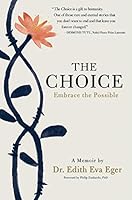
Edith Eger is a psychologist and Holocaust survivor who spent decades working with other people's trauma before realising she hadn't fully processed her own. The central insight she arrives at is not comfortable: whilst suffering is unavoidable, the choice to remain a victim is always ours. Freedom lies not in what happened to you but in how you respond to it.
Time doesn't heal, as she puts it. It's what you do with the time.
---
**Learned helplessness is the mechanism, and it works with precision.** Martin Seligman's concept describes what happens when people come to believe they lack control: they stop acting on their own behalf, even when escape is genuinely available. Eger saw this repeatedly in concentration camp survivors who remained psychologically imprisoned long after liberation. The belief that nothing you do matters produces passivity. The passivity produces outcomes that confirm the belief. The prison becomes internal, and it follows you out of the external one.
The same loop runs at lower intensities in ordinary life. Perfectionism is one variant. If your worth depends on flawless performance, then every mistake is evidence of fundamental inadequacy rather than a normal cost of operating. You stop trying new things, or you try them only inside the safety of "if only I had more time" or "if only circumstances were different." The excuse preserves the possibility of success without requiring you to risk failure. Underlying the least effective behaviours, Eger finds, is an irrational core belief so central to how someone sees themselves that they repeat it constantly without noticing it is only a belief. The belief determines the feeling, the feeling drives the behaviour, and the behaviour reinforces the belief. To change the behaviour, you have to reach the belief. This is [[Psycho-Logic]] running in private: the story people tell themselves about who they are shapes what they allow themselves to do, and the doing then validates the story.
---
**Victimhood is internal.** You can be imprisoned by circumstance, which is sometimes unavoidable. You can also be imprisoned by clinging to a story about what happened, which is always a choice. Survivors, in Eger's experience, don't ask "why me?" They ask "what now?" Viktor Frankl's observation from Auschwitz runs through everything here: they can take everything from you except your ability to choose how you respond. This is not stoic acceptance. It's active defiance. It's the refusal to let what happened determine what comes next.
To be passive is to let others decide for you. To be aggressive is to decide for others. To be assertive is to decide for yourself. Most people swing between the first two and never find the third, because the third requires owning the consequences. Eger frames unhappiness as a problem of dosage: either you are taking too much responsibility for other people's lives, or too little responsibility for your own. Both feel like concern. Both are avoidance.
---
**Responsibility is inseparable from meaning.** Frankl argued that the search for meaning is our deepest motivation, and meaning requires ownership. Without responsibility for your own path, meaning becomes impossible, because meaning requires the sense that your choices matter. Surrendering your direction to someone else's approval, over-caretaking others, operating as though your happiness is someone else's job: all of these feel like safety and all of them are their own kind of captivity.
"Only I can do what I can do the way I can do it." Your particular combination of experience, perspective, and capability is yours alone. That uniqueness is a responsibility, not a gift to be admired from a distance. Strength lives in response rather than reaction, in acting deliberately toward what matters rather than being moved automatically by what triggers you. [[Psycho-Logic|The identity constraint]] operates here too: the story of who you are, especially the story shaped by the worst thing that happened to you, becomes the boundary of what you let yourself attempt. Eger's work is about redrawing that boundary. Not by pretending the wound wasn't real, but by refusing to let it be the whole map.
---