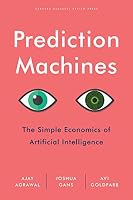
# Prediction Machines
**Ajay Agrawal, Joshua Gans & Avi Goldfarb**
---
_Think of AI as cheap prediction, not intelligence._
Every major technology shift follows the same economic logic: something expensive becomes cheap, and then we use dramatically more of it in places we never expected. Computers made arithmetic cheap. The internet made distribution cheap. Machine learning makes prediction cheap, using data you have to generate data you don't have. Reframing AI this way, as a drop in the cost of prediction rather than the arrival of intelligence, strips out the mystique and lets you think clearly about where it fits and where it doesn't.
---
**The economics of [[Complements]] explain what happens next.** When prediction gets cheap, the things you need alongside prediction become more valuable. Data is the primary complement: more and better data improves prediction quality, which raises its value further, creating compounding advantages for firms with proprietary data. But the complement that matters most is judgment, the human capacity to define what outcomes are worth pursuing and to weigh the payoffs, risks, and trade-offs of acting on a prediction. Cheaper prediction creates more decision points, each of which requires judgment. The value of genuinely good judgment rises when prediction is abundant, which is the opposite of what most people assume.
---
**A medical AI predicts with 95% confidence that a tumour is malignant.** The prediction is finished. The decision has barely started. The doctor's judgment, drawing on patient history, risk tolerance, treatment outcomes, and clinical experience, determines whether to operate, monitor, or treat differently. Prediction reduces uncertainty. Judgment assigns value to possible outcomes. You need both, and the relationship between them is what AI changes. With cheaper prediction, you face more decisions, not fewer, and each demands assessment that no model can supply. The roles that require judgment, strategists, clinicians, risk managers, operators making trade-offs under ambiguity, become more valuable as prediction scales, not less.
---
**The organisational question follows directly.** More prediction means more decisions, which means [[Designing the organisation]] for the right distribution of judgment across roles and levels. Who decides, based on what criteria, with what authority? Firms that build prediction infrastructure without building the judgment capacity to act on it will find themselves drowning in outputs they can't use. The book is thin, frankly, but the core reframe is durable: AI is an input to decisions, not a replacement for them. The discipline of separating prediction from judgment, and investing in both, is where the strategic advantage sits.
---