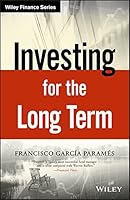
# Investing for the Long Term
**Francisco Parames**
---
_Study the company first. Only then look at the share price._
Parames comes from the Austrian school of economics, which gives him a starting point most investors don't share. The Austrian paradigm treats the economy as an ongoing, dynamic process driven by human action. Objectives and means aren't fixed. They change continuously as economic agents act and react, which means costs are never given, they're discovered through action. The entrepreneur's job isn't to regress on historical data but to make predictions based on personal reflection about how reality works. This framing sounds abstract until you see what it does to financial analysis. It makes you sceptical of any model that treats costs as stable inputs and margins as predictable outputs.
---
**The book's most useful flip: product prices determine costs, not the reverse.** Most analysts start with costs (materials, labour, overhead), add a margin, and arrive at a price. Parames insists the causation runs the other way. The price depends on consumers' willingness to pay, and that willingness is what forces costs into line. If consumers won't pay enough, the business has to cut costs or die. The margin is a residual, not a design choice.
Work the implication through. You're analysing a commodity producer that looks cheap on current margins. The standard approach takes current costs as given and projects forward. But if demand softens, the price drops, and suddenly those "given" costs are too high. The margin compresses: the price fell and costs couldn't follow fast enough. This is especially treacherous for cyclical businesses and companies with novel products, where production costs shift with market conditions and technological change. The [[Value stick]] runs in both directions: the same forces that create willingness to pay can withdraw it, and the cost structure that looked efficient at one price point becomes lethal at another. Do not take costs as given. That single instruction, applied consistently, would prevent a meaningful share of investment errors.
---
**Real assets preserve purchasing power. Monetary assets don't.** Equities represent ownership of productive enterprises that generate real returns. Bonds and cash are promises backed by depreciating currency. The gold standard's removal made monetary inflation routine, a form of non-payment that governments prefer to outright default. Parames is explicit: the bulk of savings should sit in real assets managed by competent, aligned people. Monetary assets are for short-term liquidity only.
The economy's natural state, he argues, is deflationary. Productivity increases enable more goods for the same money, which is positive for consumers. Inflation is artificial, the result of expanding the money supply beyond what the productive economy warrants. Artificial credit creation under low interest rates drives unchecked booms that inevitably end in painful corrections. Risk, properly understood, is the possibility of a permanent loss of purchasing power from an error of judgment. Volatility is not risk. For a long-term investor, equities are paradoxically less risky than monetary assets because they compound real returns across the full cycle.
---
**Parames's valuation discipline is spare and worth internalising.** He has probably never bought a stock valued above 15x earnings. Outstanding businesses with durable advantages can justify 15-20x. Mediocre businesses with limited barriers warrant 10-15x. For most companies, 15x is the appropriate anchor, equivalent to a 6.6% earnings yield, roughly in line with 200 years of real equity returns.
The quality signal he values most: cash generation exceeding reported profits. When a company generates more cash than its P&L implies, that's conservative accounting and understated earnings. The gap between reported profits and actual cash, the divergence that [[Cash and profit]] unpacks, tells you more about quality than either figure alone. The primary objective of any company is survival; after that you can talk about profits. A business that converts earnings into cash at a rate above 100% has built a margin of safety into its own accounts.
Once the valuation is set, patience does the rest. Getting the valuation right is key, Parames writes: first we study the company and only then do we look at the share price. If the company has been properly assessed and the valuation is correct, then the investment will be profitable provided we are patient. Time plays in your favour when the business is genuinely good. This is [[The whole game]] from the investor's side: value creation, competitive positioning, and barriers to entry working together, with the price paid as the final filter.
---