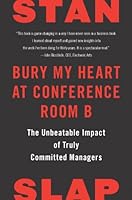
# Bury My Heart at Conference Room B
**Stan Slap**
---
_Your most important responsibility as a leader is to yourself first._
You can pay managers more, give them better tools, promote them faster, and none of it will sustainably move performance. The neurobiological source of discretionary effort is the ability to live your deepest personal values in a relationship or environment. External rewards hit a ceiling; emotional commitment doesn't. Slap's argument is uncomfortable: as a manager, your most important responsibility is to your company. As a leader, it's to yourself. Far from being subversive, satisfying that personal responsibility first is the single most supportive corporate action you can take. The [[Execution trap]] looks like effort failure from the outside; from the inside it's often alignment failure.
---
**Values are not morals.** Morals are how a person ought to act in the opinion of authority or consensus. Values are the right thing for you to do. Your individual biases for deciding which actions are true for you alone. Your source of safety, hope, and renewal. The confusion between the two is what turns values into fence-building and social weaponry. Leadership isn't based on the literal definition of your values, either. It's based on their transferable currency. Family doesn't mean time spent with family; it means open, honest communication and unconditional support. That's what family time provides, and it's what you're really chasing.
---
**Management controls performance because it impacts skill.** Monitoring, analysing, directing. Leadership creates performance because it impacts willingness. Modelling, inspiring, reinforcing. [[Designing the organisation]] means getting both right rather than choosing between them. But the lever most leaders undervalue is willingness, and willingness comes from alignment.
Leaders begin with acute awareness of what's most important to them and a deep desire to remake the world around them so they can experience it more fully. Being a leader means being able to sell your values to others. Getting people to support what you believe in most is the great triumph of leadership. Getting you to support what you believe in most is the great leap of faith.
---
**One of the biggest myths is that leadership is a burden.** If it were, nobody would do it. Leadership is a series of profound personal benefits you can get only by doing what leaders do. Vision, trust, connection, meaning. The "Better Place" leaders describe isn't rhetoric; it's driven by true belief. It has to be somewhat grounded in reality, because it's only inspirational on a sustained basis if people believe it can be achieved. Leaders create vivid descriptions of the Better Place because no one else can see it yet. It isn't real until people help them make it real.
**The key to work-life balance is not escaping work.** It's being who you really are at work. And that requires first knowing who you really are. Leaders do exactly what they say they're going to do, embodying the [[Psycho-Logic]] that actions persuade where arguments cannot. They make mistakes, admit them to themselves and their people, and change because of them. Every chance to communicate is another chance to sell or resell the vision. Leaders who fail to understand this treat communication as reporting when it's actually convincing.
---
The uncomfortable bottom line: you must live your personal values at work. There is no sustainable workaround. It's not your fault that the organisation wasn't aligned with them when you arrived. But it is your responsibility to align yourself with your own values and then make them work within it.
---